
Planet types and specialization
In this guide · Expansion
A planet’s type shapes your colony: what it produces best, which resources are scarce and how much land is available. No world excels at everything. Complementary colonies let your empire use each world’s strengths and supply its shortfalls.
The values below are each world’s natural modifiers. Final output also depends on habitability, buildings, technologies, projects and active events. Check the resource information panels for your colony’s actual breakdown.
Energy and fields: energy generator percentages apply to that building, not to the nuclear reactor. Energy consumption modifiers change building demand, not energy output. Each building level occupies one field; field percentages change the planet’s base capacity.
Affinity, families and habitability
Your preferred type has 100% habitability. Without adaptations, another type in the same family has 70% by default; a type in a different family has 0%. Direct colonization requires more than 50%. Adaptation research for the destination type can improve these values, up to 100%.
| Family | Planet types |
|---|---|
| Humid | Oceanic, continental, jungle |
| Dry | Desert, steppe, tundra |
| Extreme | Volcanic, arctic, toxic |
Tundra belongs to the dry family and arctic to the extreme family: low temperatures do not place them in the same group. If the destination does not suit you, read how to terraform before colonizing.
Oceanic

Oceans support marine farms and tidal generators, but leave little solid ground for construction. This is a strong food and energy colony if you can supply raw materials from other worlds.
- Energy generator output
- +50 %
- Food production
- +15 %
- Raw material production
- −20 %
- Building fields
- −30 %
Continental
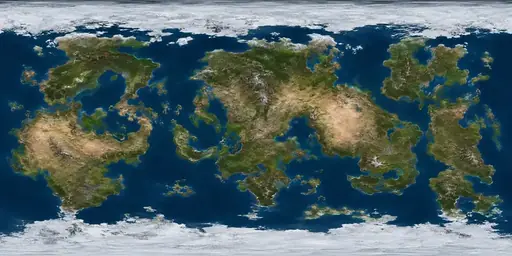
There is room for large settlements and steady farming, at the expense of mineral extraction. Local projects can turn the colony into a research hub: its science bonuses come from building those projects, rather than from the planet type itself.
- Food production
- +10 %
- Raw material production
- −10 %
- Building fields
- +10 %
Jungle

A thriving biosphere supports high food output on land that is difficult to develop. Humidity and biological contamination complicate microchip manufacturing. It works well as a compact farming colony supported by industrial worlds.
- Food production
- +30 %
- Microchip production
- −10 %
- Building fields
- −15 %
Desert

Sunlight and accessible deposits favor energy and raw material production. Water scarcity holds back both farms and hydrogen extraction. Secure food supplies before expanding its industry.
- Energy generator output
- +30 %
- Raw material production
- +15 %
- Food production
- −25 %
- Hydrogen production
- −10 %
- Building fields
- Unchanged
Steppe
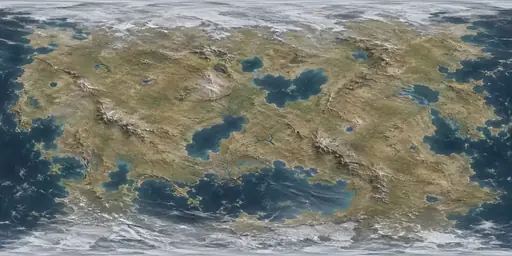
Wide plains offer space for large colonies with a solid agricultural base. Energy generation is less favorable, while water used for crops limits hydrogen extraction. Prioritize land and farming while reserving enough local power capacity to meet demand.
- Food production
- +15 %
- Energy generator output
- −10 %
- Hydrogen production
- −15 %
- Building fields
- +20 %
Tundra

Cold brines and mineral deposits support a mix of hydrogen extraction and raw material production. Protected crops yield less, and heating increases building energy use. Match mining expansion with sufficient power capacity.
- Hydrogen production
- +15 %
- Raw material production
- +10 %
- Food production
- −20 %
- Building energy consumption
- +10 %
- Building fields
- Unchanged
Volcanic

Internal heat and exposed deposits sustain a powerful mining economy. Unstable ground leaves less building space and restricts farming. This extraction hub needs imported food and careful management of geological risks.
- Energy generator output
- +40 %
- Raw material production
- +25 %
- Food production
- −30 %
- Building fields
- −20 %
Arctic

Ice supports specialized hydrogen extraction. The cold lowers energy use in microchip factories, without naturally increasing their output. Farms and energy generators produce less, so securing power is part of developing the colony.
- Hydrogen production
- +30 %
- Food production
- −30 %
- Energy generator output
- −15 %
- Microchip factory energy consumption
- −10 %
- Building fields
- −10 %
Toxic

Sealed facilities exploit the surrounding chemistry to manufacture microchips and recover raw materials. Keeping them operational requires more electricity, while conditions for farming remain poor. This industrial world depends on reliable food logistics.
- Microchip production
- +20 %
- Raw material production
- +15 %
- Food production
- −35 %
- Building energy consumption
- +15 %
- Building fields
- Unchanged
Developing a specialization
Research Planetary Ecology, then follow the branches for the worlds you want to develop. Adaptation technologies improve habitability; project technologies unlock works that you must fund and build in Command Center → Planetary Control. Researching a project does not apply its bonus automatically.
Projects strengthen the planet’s role and may introduce trade-offs. For example, multitrophic algae cultures on an oceanic world provide +10% food and −4% raw materials. Consider both effects before committing resources: specialization also changes what you need to import.
Events and crises apply additional effects; they are not the planet type’s permanent natural modifiers. Check their cards in Planetary Control and watch crisis alerts. A productive colony still needs the means to respond.
To change a new destination’s type, read the terraforming guide. To prepare your expedition, follow founding a new colony.