
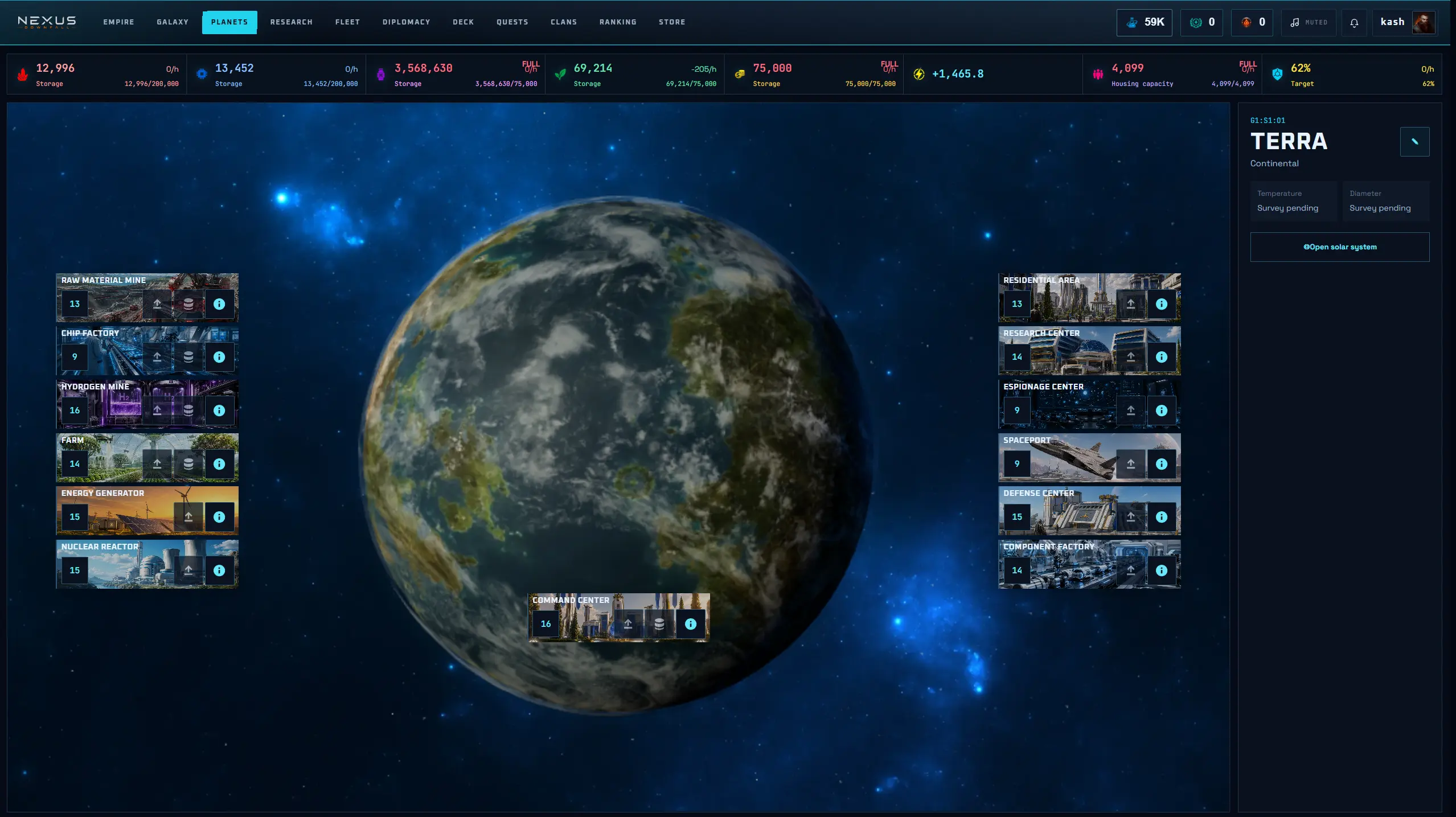
A great browser space strategy game does more than put resources and timers in a web page. It creates a persistent universe where research, fleets, diplomacy and economic choices keep affecting your position between sessions.
The best games in the genre make that persistence feel consequential rather than demanding. Returning should reveal the outcome of plans you made, not simply a longer list of queues that need attention.
Persistence should create decisions, not chores
A persistent universe gives strategy time to develop. Expansion creates borders, research closes some routes while opening others, and alliances remember what happened yesterday. Use these criteria to tell strategic persistence from a collection of recurring timers:
- Persistence: the universe continues and your decisions matter beyond a single session.
- Empire building: planets, colonies or territory develop over time.
- Purposeful research: technology changes what you can build and how you play, rather than adding the same percentage bonus repeatedly.
- Fleet strategy: ships are planned, composed and deployed rather than directly controlled like an action game.
- Social pressure: alliances, diplomacy, trade and rivalry create stories that solo progression cannot.
- Accessible browser play: you can return without a large installation, and the interface remains usable on mobile as well as desktop.
- Fair progression: spending money cannot replace resource planning, research priorities or fleet preparation.
Depth comes from trade-offs
More buildings, ships and technologies do not automatically create more strategy. Depth appears when choosing one advantage delays another: cargo capacity competes with combat strength, diplomatic reach competes with military expansion, or a specialised research route changes what your empire can do.
The same test applies to diplomacy and espionage. They matter when information, trust and timing create alternatives to direct combat. If every problem is still solved by sending the largest fleet, those systems are decoration rather than strategy.
What a modern browser MMORTS can add
Nexus: Downfall is being built around this interpretation of the genre. Its planned features include 3D solar systems, a mobile-ready interface, technology branches with distinct goals, agent-based espionage, functional diplomacy and a canonical story shaped by player decisions.
The project is also being developed without selling power, resources or construction speed. It is still in development, so these are design commitments rather than a claim that the finished experience has already been proven. Explore the research system and the development roadmap to see what is implemented, planned and still being tested.
Choose the experience you want every week
Choose by the experience you want to repeat:
- Classic browser empire building: prioritise persistent planets, fleets, alliances and meaningful offline progression.
- Diplomacy and betrayal: look for a universe where alliances can change the map, not just the chat.
- Cooperative or mobile play: prioritise flexible sessions and shared progression.
- Economic depth: choose a world where trade and logistics are strategic systems.
- Persistent narrative: look for missions and events whose outcomes continue to matter after they end.
If you are comparing specific titles rather than the genre itself, use our OGame alternatives guide to review their platforms, PvP pressure, monetisation and strategic focus side by side. If fair progression is the deciding factor, read what an OGame alternative without pay-to-win should promise.
Want to follow Early Access?
Join the newsletter for the closed-alpha retrospective and Early Access updates targeted for October 1, 2026.
Join the newsletter