
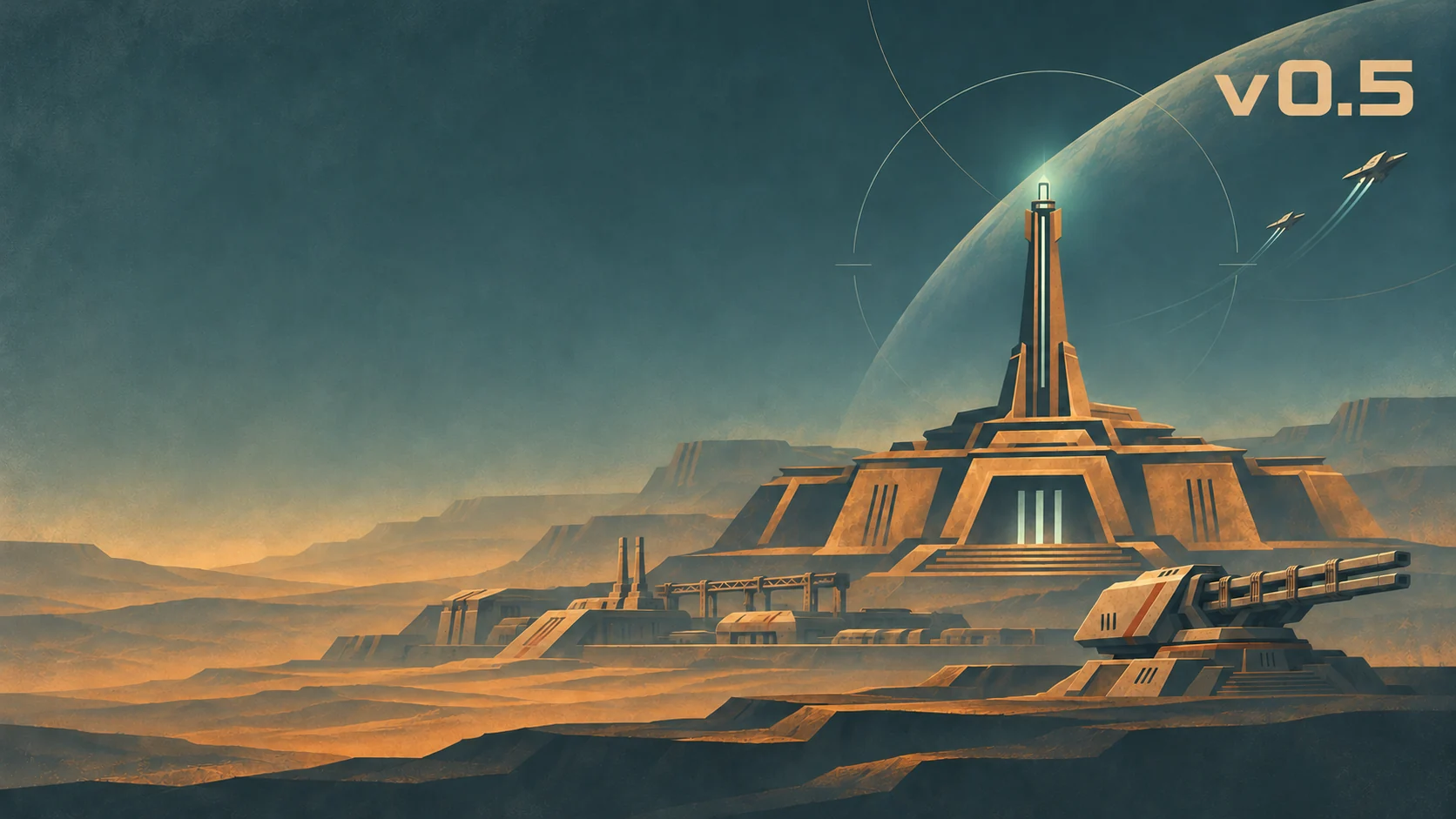
Saturday, November 21, 2026 is the day Nexus: Downfall moves to v0.5. If you’ve been thinking about trying the game, I’d love for you to join us that day. Veterans will be building their empires again too, and everyone will find the same opportunities within reach of their first planet.
The partial reset: what you keep and when you can play
Most server progress will be reset, including planets, frontier outposts and fleets. You’ll keep the character cards you’ve earned. Whether you’re returning or playing for the first time, log in on November 21 to receive a small welcome pack.
- Friday, November 20, : maintenance begins. The game will be offline until the server reopens.
- Saturday, November 21, : planned reopening with v0.5. The server may open a little earlier or later.
Your first system and what lies beyond
Every player will start in a sector with no strategic resources and an asteroid belt one system away. That leaves less of your early game up to the luck of your starting coordinates. Once you have a colony ship, you’ll have good reason to venture farther afield. Shortly after v0.5, I hope to add Project Ark, which will let you move your planet.
If this is your first game, the guide to choosing a universe, civilization and origin walks you through the decisions you make before founding your colony.
Who works, who trains and who enlists
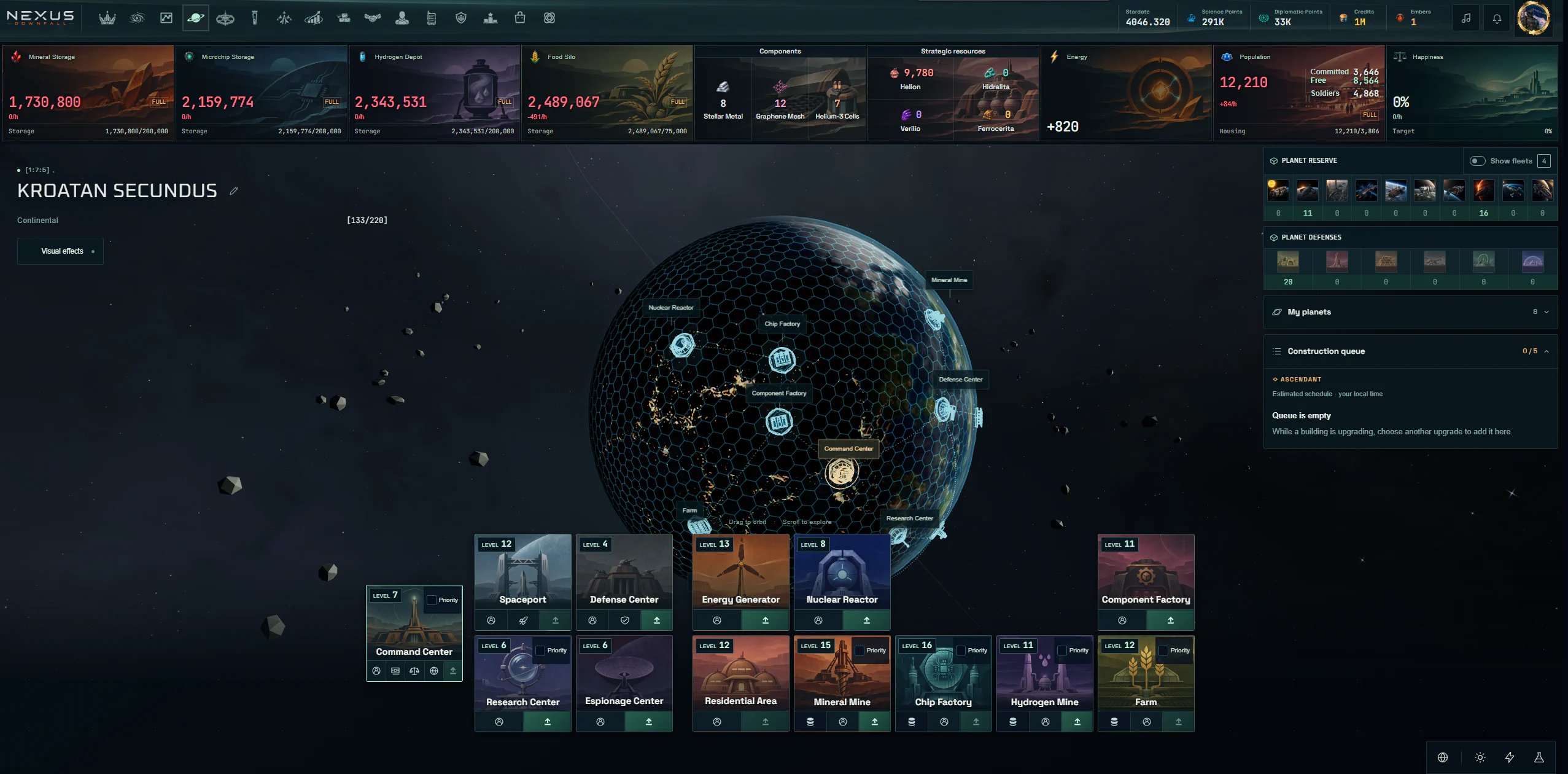
Your population will fall into four groups: workers, professionals, elites and soldiers. Each building needs a particular mix to run at full capacity. At each planet’s Command Center, you’ll be able to train citizens to move from one group to another.
Civilians will fill vacant jobs automatically. You’ll decide which buildings get priority when there aren’t enough people to go around. You can also turn down an individual building’s output: if a mine draws more power than you can spare, extract less ore and save the electricity.
You’ll need unassigned citizens to crew ships and staff defenses. Once enlisted, they become soldiers. They’ll stop working in buildings and free up housing because they live aboard ship or in barracks. They’ll still need food.
 Enlarge screenshot
Worlds, civilizations and six strategic resources
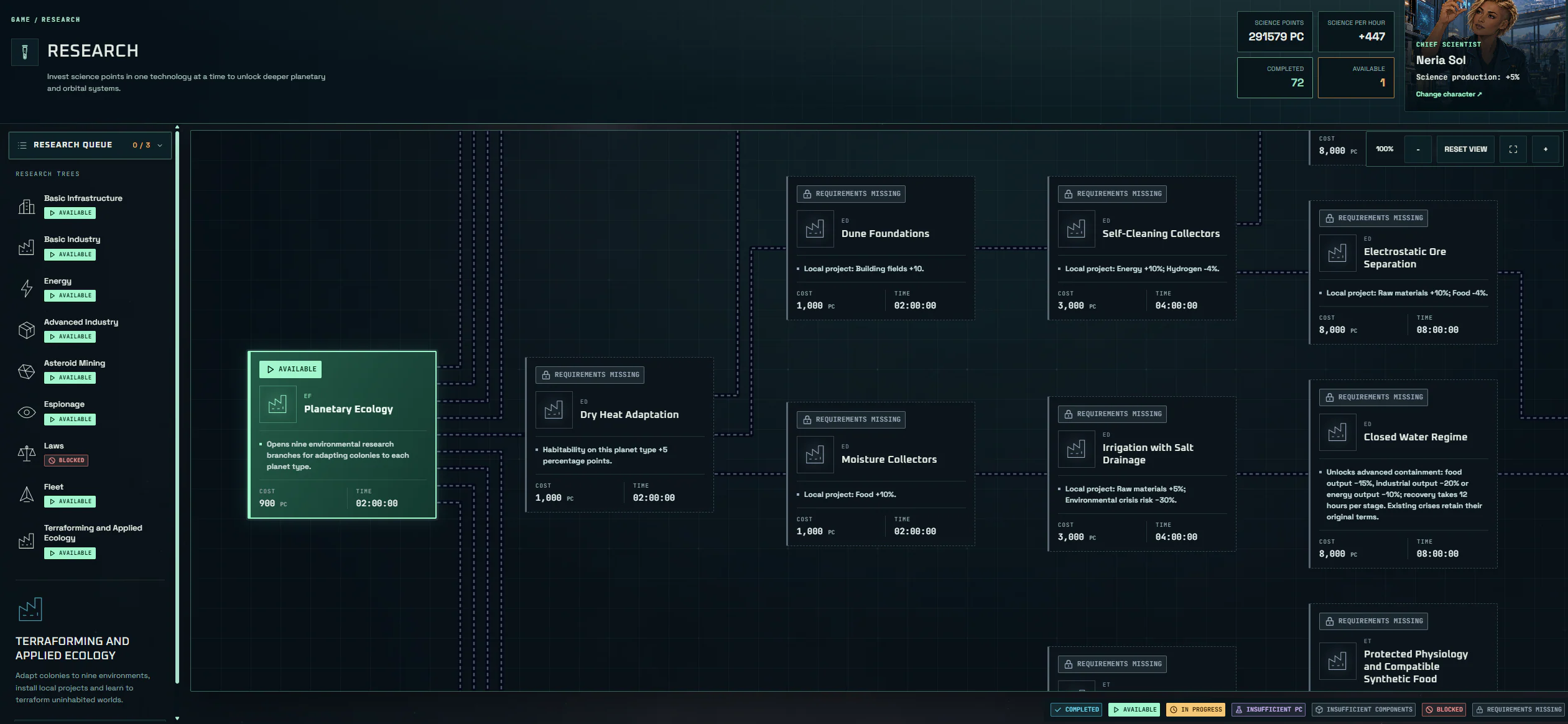
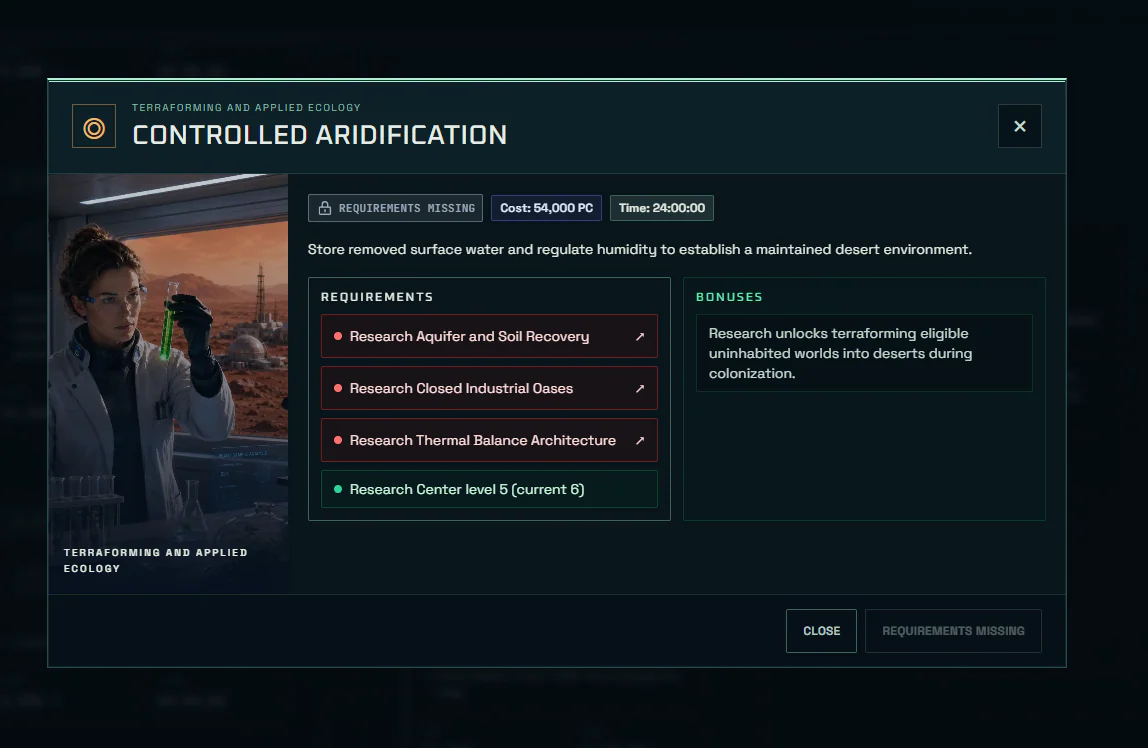
Each world type will have advantages, drawbacks and ten possible random events, including planetary crises. Research will unlock projects that build on a strength or offset a weakness. Every civilization will be playable with its own bonuses.
 Enlarge screenshot
 Enlarge screenshot
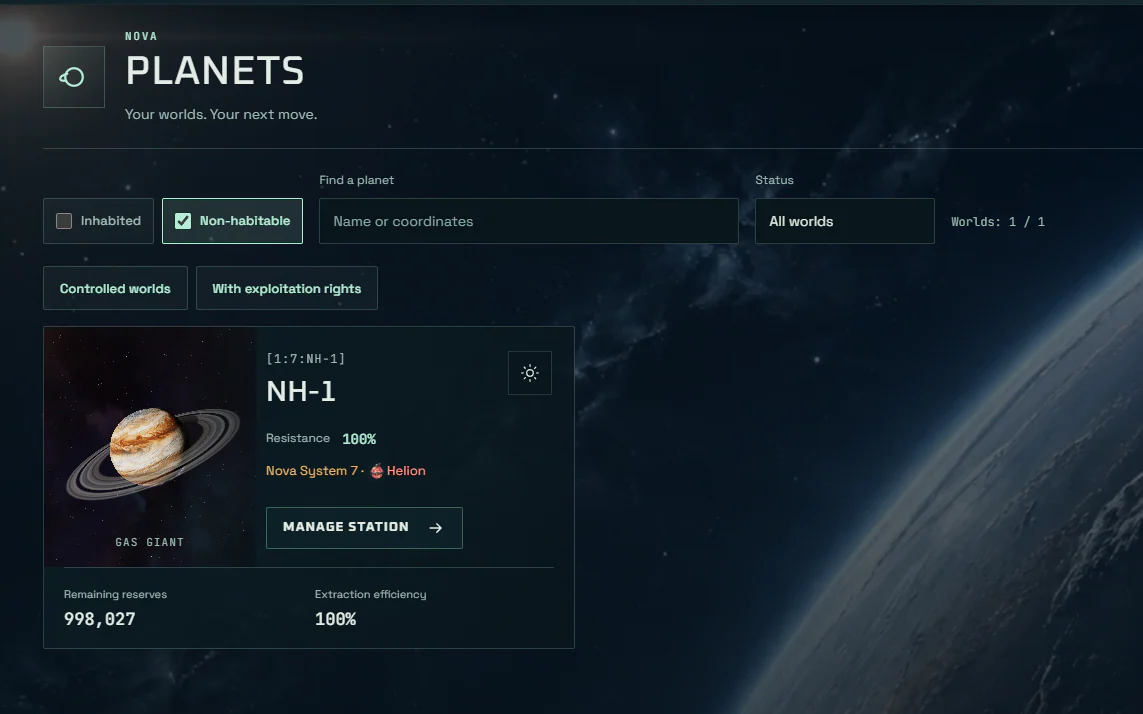
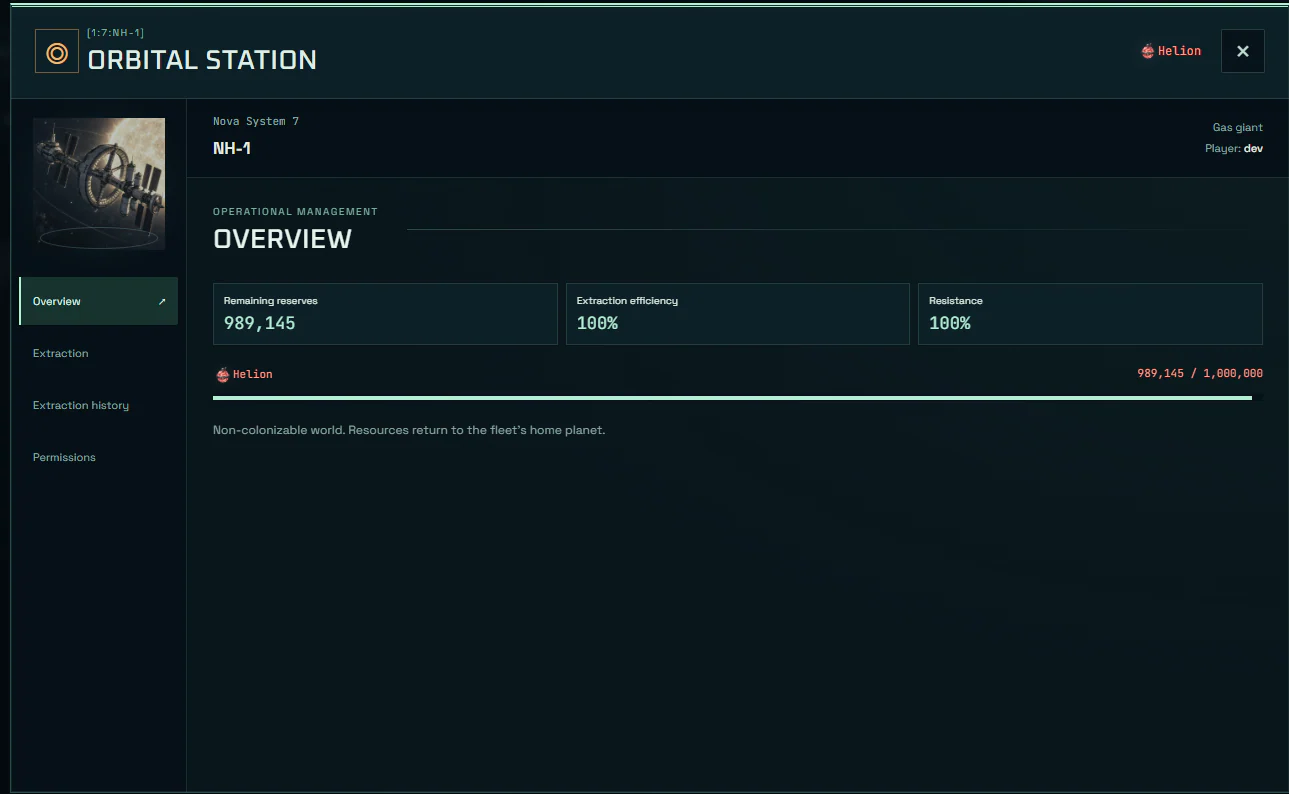
How to extract Helion from a gas giant
Uninhabitable worlds such as gas giants will supply six strategic resources. Each deposit holds a finite reserve. Every extraction reduces the amount left. Refine them at the Component Factory to make products that shorten construction times, improve output on low-habitability worlds or increase fleet cargo space. A technology wafer will halve both the science points and the research time required for one particular technology.
 Enlarge screenshot
 Enlarge screenshot
I’d like to see what you do with these six materials before adding more. I’m particularly curious which ones will persuade you to send a colony ship off its planned course.
Before you launch: battle simulations and stratagems
On the Fleets page, you’ll be able to pit combinations of ships and defenses against each other in the battle simulator. It uses the same engine as a real engagement. Run a test more than once to see what difference luck can make before you risk your ships.
You can craft stratagems from basic resources, strategic resources or components, and equip up to three per fleet. Some increase the damage dealt by a particular ship class. Others let you dispatch a ghost fleet: opponents will take longer to spot it and will need a specific hack to identify its ships.
A stratagem is spent on the next compatible mission. If you equip one that speeds up colonization and then run a transport mission, you’ll still have it when you go to found the colony. I’ll revisit the limit of three once you’ve had a chance to use them.
The planet view on desktop and mobile
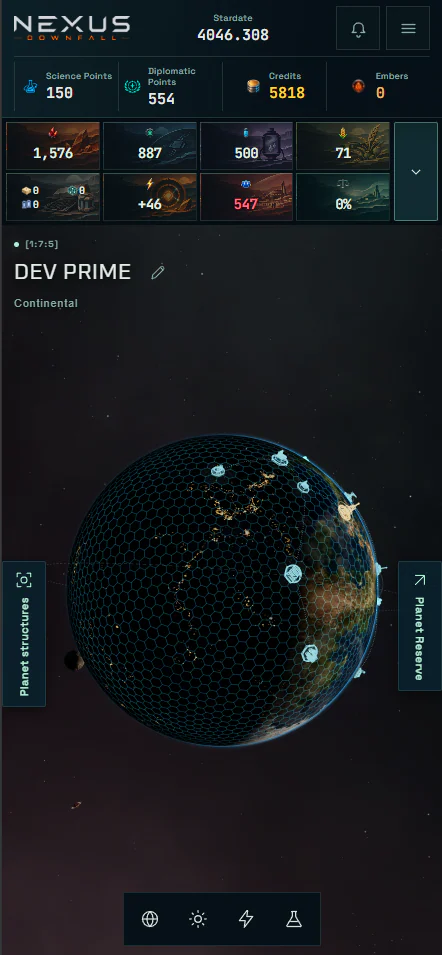
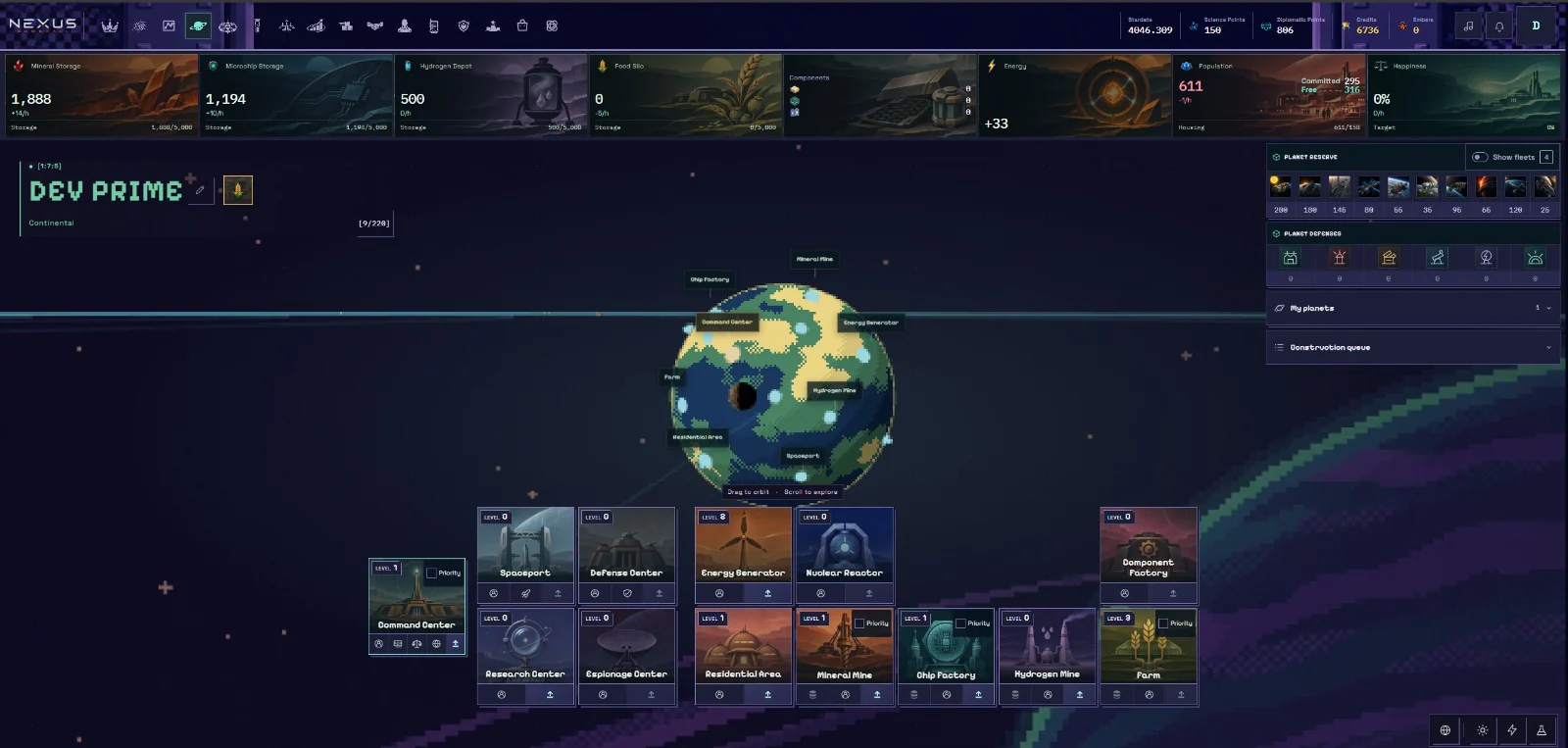
I’ve redesigned the planet view to make it easier to read and use on a small screen. If your device struggles to run it, there’s a new low-resource mode in user settings. Switch it on to skip loading the 3D models of planets and solar systems.
 Enlarge screenshot
Missions, the store and bug fixes
New side missions can appear at random once you meet their requirements. They have branching paths, and your reward depends on the ending you choose. I’m also working on the next main missions, the ones that advance the story of Nexus. I’ll have more to share when they’re ready.
The store will open with a selection of civilizations, founder packs, subscriptions and skins. Later, I’d like to expand the range of avatars, frames and themes that change the look of the interface. v0.5 also includes bug fixes. Some are already on the server; the rest arrive on the 21st. Thank you for reporting issues in the game, on Discord and by email.
 Enlarge screenshot
Getting Nexus ready for Steam
I’m separating the game engine from the interface so the same rules can run across different devices. I already have a working Windows version, though it still needs work. The goal is a Steam release for Windows, Linux and macOS, followed by native Android and iOS apps. The apps can wait a little longer because you can already play in a mobile browser.
After v0.5: the road to 1.0
The roadmap on the website is out of date. Some ideas have changed, others have been dropped and several systems have arrived ahead of schedule. I expect to spend the first week after reopening on stability, balance and checking that payments and player data are handled securely. Once the release is stable, I’ll get back to the regent and forms of government, then weekly missions and their rewards.
Two major systems remain. Espionage will let you send agents into rival empires to gather intelligence, sometimes in real time, sabotage production, intercept fleets, spread unrest or incite a rebellion. If diplomacy is your preferred playstyle, you’ll have ways to act beyond sending a fleet.
With diplomacy, you’ll be able to sign one-off or recurring trade contracts, form defensive alliances, declare war on players or clans and appeal to the galactic community for help. In the Galactic Senate, you’ll be able to push for decisions that suit your empire or complicate life for a rival. I have the Senate from Star Wars and the galactic community in Stellaris in mind. And yes, the Senate could become an empire in its own right.
I’d like to have these systems in place before the end of 2026, but there’s no firm date yet. The next big step would be planets run by non-player characters (NPCs) that make their own decisions and trade on their own account. Imagine a planet flooding the market with cheap food. If someone blockades it, its sell orders disappear, prices rise and another empire might find it worthwhile to fight a war to free it. That’s the kind of story I’d like to see emerge in Nexus.
I’ll go into each system in more detail in future posts and on the wiki. Thank you for the suggestions, the bug reports and, above all, for playing. To everyone supporting me on Patreon: your support gives me the time to keep building Nexus. If it’s your first day, come say hello on Discord or jump into the game. I’d love to hear where you founded your empire.
See you among the stars.
Kash
v0.5 patch notes
- Partial reset. You’ll keep your earned character cards. Log in on November 21 to receive a welcome pack.
- Starting map. Every empire starts in a sector without strategic resources, with an asteroid belt one system away.
- Population and recruitment. Train workers, professionals and elites at the Command Center. Ships and defenses draw their crews from unassigned citizens. Recruits become soldiers and still need food.
- Jobs and energy. Buildings fill vacancies automatically. You can set staffing priorities or lower a building’s output to save power.
- Worlds and civilizations. Each world type has strengths, drawbacks, projects and ten possible events, including planetary crises. Every civilization is playable with its own bonuses.
- Extraction and refining. Extract six strategic resources from finite deposits, share extraction rights and refine the materials at the Component Factory.
- Battle simulator. Test ships against defenses on the Fleets page using the same engine that resolves real battles.
- Stratagems. Craft and equip up to three per fleet. Each one is spent on the next compatible mission.
- Interface and performance. The planet view has been redesigned for desktop and mobile. Low-resource mode skips the 3D models of planets and solar systems.
- Side missions. Once you meet their requirements, new missions can appear with branching paths and rewards that depend on your choices.
- Store. The initial selection includes civilizations, founder packs, subscriptions and skins.
- Engine and fixes. A Windows build is in development as part of the work toward Steam. v0.5 also includes fixes for bugs reported by the community.
- Other changes. v0.5 also includes minor adjustments, performance improvements and additional bug fixes.
Aurora is open. Your empire starts here.
Play Nexus: Downfall for free in your browser. Create an account, establish your first colony and explore Aurora. No download required.
Play now for free!